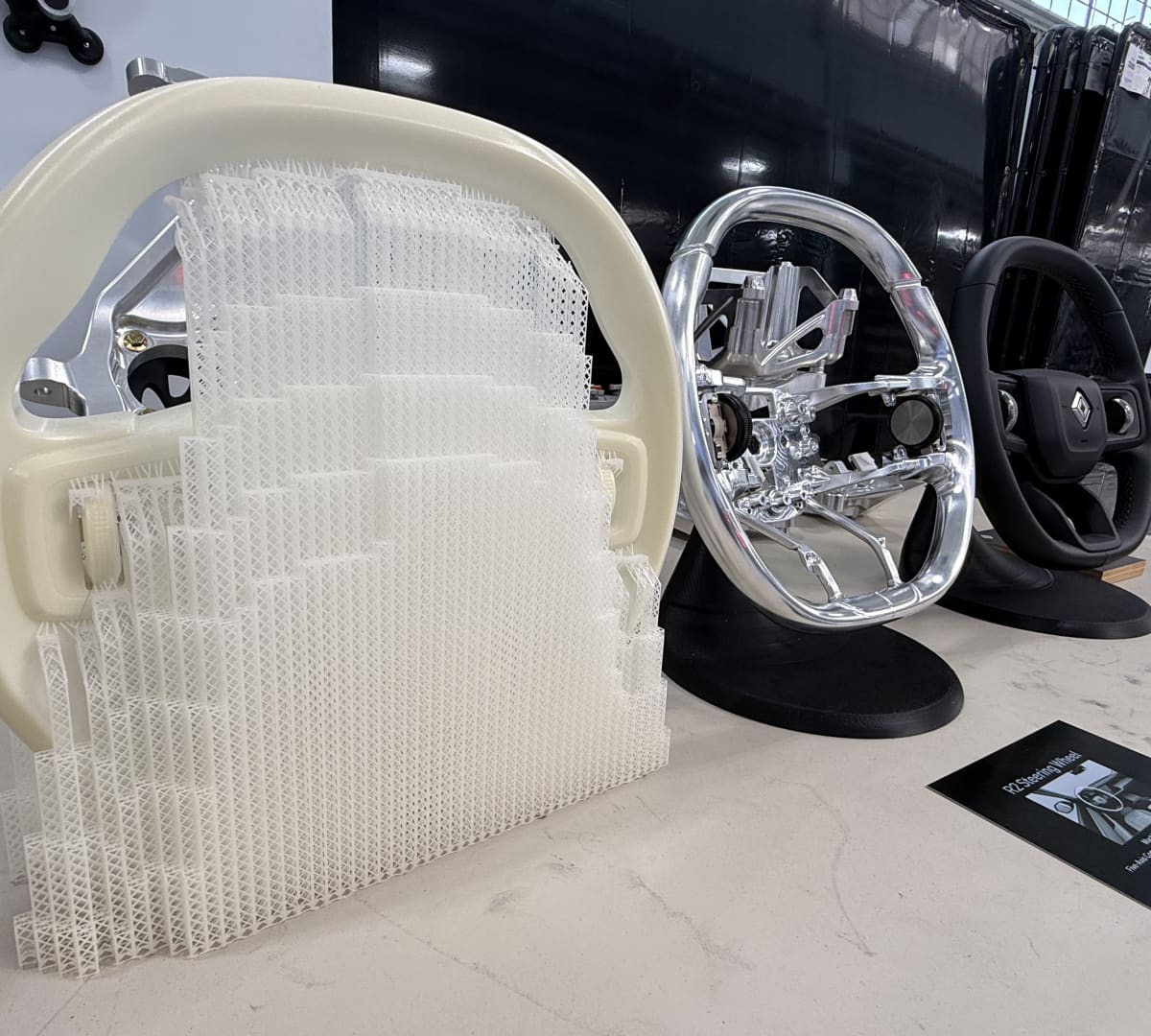
Rivian and Ford are expanding their use of 3D printing in vehicle manufacturing, according to a CNBC report from a tour of Rivian's operations in suburban Detroit.
Rivian has spent more than $5 million on 3D-printing machines, and its materials costs have grown to about $1.7 million a year. Jared Beck, head of Rivian's additive manufacturing, said the machines typically pay for themselves within a year. He said the technology lowers supplier tooling costs, streamlines logistics and cuts production times for some parts from weeks to days, if not hours.
"At this point, we don't have a choice but to scale up and begin using it through all factions of Rivian," Beck told CNBC. "We're going to be democratizing 3D printing for the entire company."
Rivian is adding machines that can build flexible silicone parts and installing a bay of printers at its Normal, Illinois, plant so employees can print parts on demand.
Ford has used 3D printing at many of its plants. Gregory Foresi, a Ford mechanical engineer who ran the company's 3D-printing lab at its plant from 2024 until last month, said employees can request printed tools through an app. He said a vending machine for 3D-printed parts supports F-150 production near Dearborn, Michigan. Ford said it expects to have 3D labs at more than 23 plants by the end of this year and already runs more than 200 machines in its official program.
General Motors also uses 3D-printed parts, including 135 components on its Cadillac Celestiq, according to the report. Fadi Abro, senior global director of automotive and mobility at Stratasys, said GM shows how companies can "standardize and then scale" the technology.